
Breaking! Ship Sinks Near Fangqian Bridge on Changzhou's Wuyi Canal 突发!常州武宜运河坊前桥发生沉船事故
Breaking! Ship Sinks Near Fangqian Bridge on Changzhou's Wuyi Canal
突发!常州武宜运河坊前桥发生沉船事故
June 8th – Following days of heavy rain, the water flow in Changzhou's Wuyi Canal became dangerously swift, transforming the usually calm waterway into “turbulent rapids.” That afternoon, the section near Fangqian Bridge became the scene of a sinking incident.According to a preliminary investigation by the Changzhou Local Maritime Department, a cargo ship fully loaded was passing through this area when it was suspected to be caused by the impact of the unusually turbulent current. Compounding the danger, the water level in this stretch is relatively shallow. Unfortunately, the ship's bottom violently collided with obstacles on the riverbed.
The forceful impact caused hull damage, allowing river water to rapidly flood into the ship's compartments. The vessel eventually lost buoyancy due to excessive water ingress, sinking and running aground in the waters near Fangqian Bridge. The cargo onboard suffered substantial losses. Fortunately, there were no casualties in the accident.Subsequently, maritime patrol boats arrived to secure the area and carry out rescue and recovery operations. Navigation has now resumed. Life for sailors is tough; always remember: Safety first!
6月8日,连日暴雨后的常州武宜运河水流湍急,往日平静的航道化身“激流险滩”。当日下午,坊前桥航段成为一起沉船事故的现场。据常州地方海事部门初步调查,一艘满载货物的运输船在通过该水域时,疑因受异常湍急的水流冲击,加之该河段水位相对较浅,船底不幸与河床障碍物发生剧烈碰撞。猛烈的撞击导致船体破损,河水迅速涌入船舱,船只最终因进水过多失去浮力,在坊前桥附近水域沉没搁浅,满载货物损失惨重。所幸事故未造成人员伤亡。随后,海事艇前来维持秩序,开展后续救援工作,目前已通航。跑船人不易,谨记安全第一!
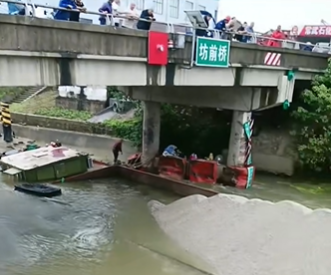
Image Credit: Internet
图源网络
An Introduction to Wuyi Canal
武宜运河
As the control line for 1700+ square kilometers in Taihu Lake’s Huxi and Wuchengxi areas, Wuyi Canal features gates like the Nancangate on its east bank. It’s a key Grade 5 waterway between Changzhou and Yixing. The canal flows north to south, starting from Shilongzui of the Jiangnan Canal in Changzhou, running through various towns, and finally reaching Dongjiu (linked to Taihu Lake) via Yixing City.
Wuyi Canal handles the majority of cargo transport between Changzhou and Yixing, with an annual traffic volume of over 40 million tons (2024 data). Ships of 500 – 800 tons ply its waters. Connected to the Yangtze River and Taihu Lake, it functions as a “quick waterway” between them and also provides flood prevention and drainage.
武宜运河是太湖流域湖西高片和武澄锡低片1700余平方公里地区的控制线,东岸建有南运河闸、大寨河闸、顺龙合闸渡船河闸和武南河套闸。是常州、宜兴间主要航道(五级 )。 武宜运河的常年流向为自北向南,北起常州江南运河的石龙嘴,向南流经武进区的牛塘镇、前黄镇,进入宜兴市的闸口镇、和桥镇,最终经宜兴城区汇入东氿(与太湖相通)。
作为常州与宜兴间的主要航道(五级),承担两地大宗物资运输,年船舶流量超4000万吨(2024年数据),通行船舶普遍达500–800吨级。通过北接京杭大运河(经德胜河连通长江)、南连锡溧漕河与太滆运河(入太湖),形成长江与太湖间的“快速水道”,兼具防洪排涝与航运功能。
Recent Vessel Grounding Incidents: An Overview
近期船舶搁浅事故一览
The shipping industry serves as a critical backbone of the global economy, shouldering the immense task of transporting the vast majority of the world's goods. However, the shipping process is not without its risks. Vessel grounding incidents occur periodically around the globe, posing significant challenges to the maritime sector.
From bustling commercial shipping lanes to waters near ports, examples of vessel groundings are numerous. Each incident carries the potential for substantial economic losses and even environmental disasters. The following are summaries of some recent grounding cases. These incidents sound a stark alarm, underscoring the vital importance of maritime safety – a priority that demands unwavering attention.
航运业作为全球经济的重要支柱,承担着绝大部分货物的运输任务。然而,航运过程并非一帆风顺,船舶搁浅事故在全球范围内时有发生,给航运业带来了巨大挑战。从繁忙的商业航道到靠近港口的水域,船舶搁浅事故的案例不胜枚举,每一次都可能引发严重的经济损失甚至环境灾难。以下是一些近期船舶搁浅的案例,它们为我们敲响了警钟,提醒我们航运安全的重要性不容忽视。
A Containership Ran Aground at Sentosa
On the morning of June 6, a containership ran aground near Tanjong Beach in Singapore’s Sentosa, blocking part of the lagoon. The surrounding sea wall was damaged, but the containership was stable with no pollution caused. Singapore sent tugs to free it quickly. After inspection in nearby anchorages, the cause is still under investigation.
集装箱船在圣淘沙搁浅
6 月 6 日上午,集装箱驳船在新加坡圣淘沙的丹戎海滩附近搁浅,导致泻湖部分被阻塞。该区域的海堤因这艘驳船而受损,目前没有关于驳船本体受损的报告。有关方面报告称,这艘驳船目前状况稳定,没有造成污染。新加坡方面派出拖船,不久后便成功将驳船拖离现场。该驳船随后被拖至附近锚地区域进行检查,目前该事件原因正在调查中。
A Chinese Fishing Vessel Ran Aground near Meiji Reef
On the afternoon of June 7, a Chinese fishing vessel ran aground near Meiji Reef, which is 3.2 kilometers east of Zhongye Island in the Nansha Islands of the South China Sea. The grounding occurred during fishing operations due to operational errors. Zhongye Island, the second - largest natural island in the Nansha Islands, is an inherent territory of China. However, it has been illegally occupied by the Philippines for 54 years since 1969. Over the decades, the Philippines has carried out continuous expansion and military deployment on the island as if it were a matter of course.
中国籍渔船在梅九礁海域搁浅
6月7日下午,一艘中国渔船在中国南海南沙群岛中业岛以东3.2公里处梅九礁附近进行渔业作业时,因为操作不慎,导致渔船搁浅在距离中业岛东侧不到2海里的梅九礁附近海域。而这个中业岛,可不是普通岛礁——它是中国的固有领土,却被菲律宾非法霸占了整整54年!中业岛,南沙群岛第二大自然岛,1969年被菲律宾非法侵占,几十年里不断扩建、驻军,搞得好像“天经地义”似的。
Cargo Ship Grounding at Line K5 of Caizi Lake
On June 7, a cargo ship was influenced by weather, water flow and improper navigation,and ran aground at Line K5 of Caizi Lake in the Anqing Section of the Jianghuai Canal.The grounding severely narrowed the navigable width and blocked the channel. Thanks to timely measures, the ship was refloated by 5:25 p.m., and navigation returned to normal.
货轮在菜子湖线K5处搁浅
6月7日,因受天气、水流、驾驶不当等因素影响,江淮运河安庆段过闸空载货轮,在菜子湖线K5处搁浅,航道有效通航宽度被严重挤占,航道堵塞,情况紧急,如不及时处置,会给来往过闸船舶通航安全带来严重影响。在多种有效举措下,该船于当日17时25分顺利脱困,航道恢复正常通航。
Causes of Stranding Accidents
Failure to Implement Pre-departure Duties:Before departure, crew members fail to conduct thorough checks of key equipment such as navigational aids and steering systems, allowing vessels to sail with undetected defects.
Insufficient Safety Awareness During Navigation:Crew members may be unfamiliar with the navigation environment, choose incorrect routes, or violate navigation regulations by taking shortcuts, driving while fatigued, or over - drafting the vessel.
Impact of Objective Factors:Sudden changes in water conditions, narrow or highly curved channels, poor visibility due to bad weather, and malfunctions of machinery, steering systems, or control systems can all contribute to accidents.
常见触礁/搁浅事故原因
开航前职责未落实
开航前船员未认真落实开航前检查职责,对助航、舵系等关键设备检查不足,导致设备隐患没有及时排除,船舶“带病”航行。
航行中安全意识不足
船员对航道通航环境不熟悉,甚至错走航路;部分船舶存在违反航行规定的行为,如为省油走航道外捷径、疲劳驾驶、超吃水航行等。
客观因素影响
水文环境突变,不满足通航要求;可航宽度小,弯曲度大;恶劣气象下能见度不良;机器设备、舵机、操舵系统发生故障等。
Self - Rescue Measures After Stranding
In case of stranding, promptly report to the maritime traffic management center. Do not move the vessel blindly. Display the required signals and use VHF to broadcast the vessel’s movements to alert nearby ships.
Inspect the hull. If damaged, immediately take measures to plug leaks and drain water. Measure the draft at the bow, stern, and both sides, determine the seabed geology and slope, and identify the location and extent of damage. Record details of the stranding, protect the engine room, and ensure power availability for drainage and preparations for refloating.
If the stranding is minor and there is sufficient water depth at the stern with the propeller still operational, attempt to refloat by reversing.
If the sea is not rough and the vessel has not settled on the reef, drop an additional anchor in the planned refloating direction. Use the combined force of the anchor winch and reverse propulsion to free the vessel.
If only one end of the vessel is aground and the other end has sufficient water depth, consider shifting the load to refloat.
If the stranding is severe or rocks have pierced the hull and the above measures fail, call for rescue vessels to conduct lightering operations to reduce the vessel’s load and achieve refloating.
搁浅后如何自救
- 船舶发生搁浅险情时,及时向海事交管中心报告,切勿盲目动船,按规定显示信号,通过VHF发布船舶动态,提醒附近船舶注意避让。
- 检查船体,如有破损应立即采取堵漏、排水等措施。测量艏、艉及两舷吃水,查明水底地质和坡度,以及船体的损害部位和程度,将搁浅的时间、地点、气象和水文等情况记录,极力保护机舱,确保动力随时可用和投入排水,做好脱浅准备。
- 经过检查,如搁浅较轻,而且尾部有足够水深,螺旋桨可以继续工作,则可采用倒船离浅。
- 在风浪不大,船体没有坐礁的情况下,可在预定离浅方向上加抛辅助锚,利用锚机拉力和倒车的力量使得船体离浅。
- 如船体只是一端搁浅而且搁浅点靠近船艏或船艉,未搁浅的一端又有足够的水深,可采用移动载荷的方式脱浅。
- 在搁浅严重或者礁石插入船底,其他措施不能离浅时,申请救援船舶进行过驳作业,通过卸载减荷的方式脱浅。
The recent sinking accident near Fangqian Bridge on Changzhou's Wuyi Canal, while fortunately not resulting in any casualties, has once again sounded a stark alarm for maritime safety through the heavy cargo losses incurred. The hydrological changes under extreme weather conditions and the latent risks within complex waterways constantly test a vessel's operational capabilities and emergency response.This incident serves as a crucial reminder to all maritime industry professionals: while pursuing efficiency, we must ingrain the principle of "Safety First" into every voyage and every operational detail. Only by maintaining a deep respect for the forces of nature, strictly adhering to regulations, strengthening hidden hazard identification, and rigorously conducting emergency drills can we effectively mitigate risks on these vital "blue highways" that connect economic lifelines. This ensures the safety of personnel, vessels, and cargo.The resumption of navigation marks the end of the immediate incident response, but it must also signify the beginning of sustained efforts to fortify our safety defenses. The journey towards ensuring maritime safety is long and arduous, demanding unwavering vigilance and admitting no complacency.
此次常州武宜运河坊前桥的沉船事故,虽未造成人员伤亡的不幸,却以沉痛的货物损失再次敲响了航运安全的警钟。极端天气下的水文变化、复杂航道中的潜在风险,时刻考验着船舶的操作与应变能力。它提醒所有航运从业者,在追求效率的同时,必须将“安全第一”的原则刻入每一次航行、每一个操作细节。唯有敬畏自然、严守规程、强化隐患排查与应急演练,才能在这条连接经济命脉的“蓝色公路”上,尽可能地规避风险,保障人、船、货的安全。通航的恢复是事故处理的终点,但更是持续筑牢安全防线的起点。航运安全,任重道远,不容丝毫懈怠。
 RELATED NEWS
 Hotline
 Email
Email

 沪公网安备 31011502016705号
Disclaimer:
This communication has been prepared for general information only. To the maximum extent permitted by law, E-PORTS and its affiliated companies, its and their employees, directors, agents, contractors (of any tier) and partners shall not be liable for any loss, claim, charge, damage, liability or damages howsoever arising in connection with the information even if advised of the possibility of damages. The use of the information shall be at your sole risk. Information contained herein comes with no representation or warranty (express or implied) and specifically is not represented or warranted to be correct, complete, accurate or up to date. The information is provided on an “as is” and “as available” basis and is not intended to be relied upon in any way. You shall be solely responsible for the selection, use, efficiency and suitability of the information.






 Chat with us