
Collision in the Sulina Canal: Bulk Carrier Holed in Head-on Crash 惊险!苏利纳运河两船相撞,船体撞出大洞
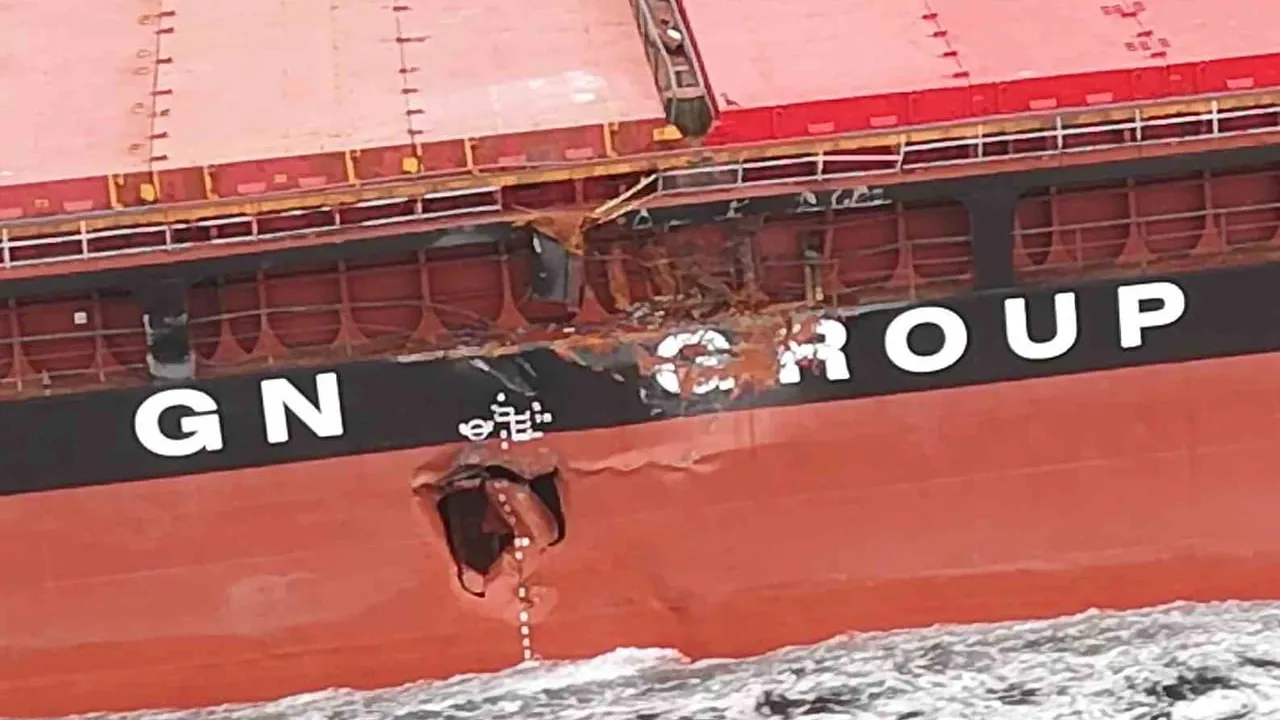
Early on December 19 local time, a Panamanian-flagged bulk carrier collided head-on with a cargo ship on the Sulina Canal in Romania, causing serious damage to its hull.
当地时间12月19日凌晨,位于罗马尼亚苏利纳运河这一多瑙河通往黑海的关键水道上,一艘巴拿马籍散货船在航行中与另一艘货轮发生正面碰撞,造成船体严重破损。
Process of the Accident
事故过程
The collision resulted in severe damage to the bulk carrier. The accident occurred in the narrow channel of the Sulina Canal, where another cargo ship struck the bulk carrier's starboard side directly. The bulk carrier sustained a large hole in its hull and structural damage, with severe breakage above the waterline. Both ships were carrying cargo at the time of the collision; and fortunately, there were no injuries.
这场碰撞导致货船严重受损。事故发生在苏利纳运河狭窄航道内,另一艘货轮船首直接撞击了该散货船右舷,造成散货船船体出现大洞和结构损坏,水线以上部位严重受损。碰撞发生时,两船均载有货物,所幸未造成人员伤亡报告。
After the collision, the Turkish Coast Guard immediately activated its emergency response mechanism. On December 25, the damaged bulk carrier, escorted by Coast Guard tugboats, safely passed through the Bosphorus Strait in Istanbul and arrived at the Tuzla shipyard for emergency repairs.
事故发生后,土耳其海岸安全总局立即启动应急机制。12月25日,受损散货船在海岸安全总局拖船护航下,安全通过伊斯坦布尔博斯普鲁斯海峡,抵达图兹拉造船厂区进行紧急修理。
Navigation Rules of the Sulina Canal
苏利纳运河航行规则
The Sulina Canal is the main waterway of the Danube River leading to the Black Sea. It is located in Romanian waters and its navigation rules mainly follow the International Regulations for Preventing Collisions at Sea (COLREGs 72) and Romanian domestic shipping regulations. It is managed and enforced by the Romanian Navigation Authority (ANAF).
苏利纳运河作为多瑙河通向黑海的主要航道,是连接东欧内陆与国际航运网络的战略要道,属于罗马尼亚水域,其航行规则主要遵循《国际海上避碰规则》(COLREGs72)及罗马尼亚国内航运法规,并由罗马尼亚航道局(ANAF)负责管理和执法。
This collision occurred in a narrow canal channel. Therefore, it is significant to understand and adhere to local mandatory navigation rules to prevent such accidents.
本次碰撞发生在狭窄的运河航道内,深刻理解并严格遵守当地的强制性航行规则,是预防此类事故的根本。
Basic Principles and Right of Way: The fundamental principle of the canal is “keep right”. When navigating, vessels must always remain on the right side of their lane, clearly giving way to the centerline. In narrow sections, large vessels must give way to smaller boats, fishing vessels, and working vessels, maintaining a safe distance with them.
基本原则与通行权:运河实行 “靠右航行” 的根本原则。航行时需始终保持在本船航道右侧,明确让出中心线。在狭窄段,大型船舶必须主动为小型船只、渔船及作业船让行,保持安全距离。
Speed and Communication Discipline: The speed limit is generally 8-10 knots for the entire route, with even lower limits near residential areas and other sensitive areas. All vessels must maintain contact with the Sulina Traffic Control Center using the designated VHF channel (e.g., CH10/12/16), report their movements, and communicate and clarify their intentions in advance before passing other vessels or through narrow passages.
航速与通信纪律:全航段严格限速,通常为8-10节,居民区附近等敏感区域要求更低。所有船舶必须使用VHF指定频道(如CH10/12/16)与苏利纳交通控制中心保持联系,报告动态,并在会船、通过狭窄区前提前沟通、明确意图。
Environmental and hydrological warnings: Special attention should be paid to seasonal changes. Summer dry seasons may result in shallower actual water depths, while winter may present challenges for maneuvering due to floating ice. Captains are advised to check the latest Notices to Navigators and electronic chart updates issued by the Romanian Navigation Authority in advance when planning voyages.
环境与水文预警:需特别注意季节性变化,夏季枯水期可能导致实际水深变浅,冬季则可能有浮冰影响操纵。船长在计划航次时,建议提前关注由罗马尼亚航道局发布的最新《航道通告》和电子海图更新信息。
Liability, Insurance and Shipowner's Risk Management
责任、保险与船东的风险管理
As the accident enters the post-accident phase, clarifying liability and handling insurance claims would have been the focus. The shipowner's response strategy directly affects the extent to how much loss can be recovered.
事故进入善后阶段,责任厘清与保险理赔成为焦点。船东的应对策略直接关系到经济损失的挽回程度。
Basis for liability investigation: The key issue is to judge which party violated the aforementioned navigation rules, such as whether they failed to keep to the right, exceeded the speed limit, failed to communicate effectively, or misunderstood the right of way. Even if one party is found liable, the other party may still be held partially liable for failing to exercise good seamanship in collision avoidance actions.
责任调查依据:核心在于判断哪一方违反了前述航行规则,例如是否未靠右行驶、超速、未有效沟通或误解通行权。即使一方被认定为责任方,另一方也可能因“未运用良好船艺采取避碰行动”而被认定承担部分责任。
Key points of insurance claims:
Hull insurance: This covers repair costs for your vessel. When making a claim, the insurance company will thoroughly examine whether the cause of the accident falls within the policy's coverage.
P&I insurance: This is the shipowner's liability insurance. It covers compensation for losses to third parties (e.g., other vessels, cargo, docks), legal fees, and potential oil spill liability. If the accident is determined to be caused by the negligence of the captain and crew, P&I insurance will usually be effective; however, if it involves unseaworthiness of the vessel or gross mismanagement by the shipowner, the insurance company may refuse to pay.
Shipowner's action checklist: After an incident, it is crucial to preserve evidence such as the voyage data recorder (VDR), logbook, photos, and videos immediately, as is has a decisive impact on subsequent liability determination and insurance claims. Also, notify the insurance company and P&I club as soon as possible and conduct follow-up work under their guidance. Never make any commitments to liability by yourself.
保险理赔关键:
船壳险:负责赔偿本方船舶的修理费用。理赔时,保险公司会详细审查事故原因是否属于保单承保范围。
保赔险:这是船东的责任险,至关重要。它覆盖对第三方(对方船舶、货物、码头等)的损失赔偿、法律费用以及可能产生的油污责任。如果事故被认定为船长船员疏忽所致,保赔险通常予以赔偿;但若涉及船舶不适航或船东重大管理过失,保险公司可能拒赔。
船东的行动清单:事故发生后,立即保存航行数据记录仪(VDR)、航海日志、照片视频等证据至关重要,这对后续责任认定和保险索赔有决定性影响。并第一时间通知保险公司和保赔协会,在其指导下开展后续工作,切勿自行承诺责任。
Summary of Experience: Transforming Rules into Security Practices
经验总结:将规则转化为安全实践
For fleets navigating complex inland waterways like the Danube, it is essential to translate written rules into safety habits for every individual on board and systemic safeguards for the company.
对于航经多瑙河这类复杂内河航道的船队而言,必须将纸上规则转化为船上每一个人的安全习惯和公司的系统保障。
Enhance contextualized training: Company safety training should not be limited to theoretical assessments. Simulators or case studies should be used to focus on training crew members in specific decision-making and communication procedures when encountering oncoming vessels, sudden mechanical failures, or poor visibility in narrow, one-way waterways like the Sulina Canal.
深化情境化培训:公司的安全培训不应仅限于理论考核。应利用模拟器或案例研讨,重点训练船员在苏利纳运河这类狭窄、单向航道中,遭遇对驶船、突发机械故障或能见度不良时的具体决策与通信流程。
Upgrade voyage preparation instructions: It is recommended to establish a safety management system and prepare a detailed voyage plan before entering special waters such as the Danube River. The plan should include an analysis of the latest navigation notices and hydrological and weather forecasts, as well as specific operational plans and backup schemes for passing through key points.
升级航次准备指令:建议建立安全管理体系,在进入多瑙河等特殊水域前做好详细的航次计划,其中需包含对最新航道通告、水文天气预报的分析,以及通过关键节点时的具体操作预案和备用方案。
Optimize navigation technology: When navigating, keep a lookout and pay attention to changes in AIS, electronic charts and real-time traffic information. The crew can more intuitively understand their precise position in narrow channels and their dynamic relationship with other ships by this way.
合理利用导航技术:航行时要保持瞭望,并关注AIS、电子海图和实时交通信息的变化,这有助于船员更直观地理解自身在狭窄航道中的精确位置和与它船的动态关系。
Promote a safety culture: The company should clearly communicate that safe navigation are beyond schedule pressure under any circumstances. When the situation is unclear or communication is poor, it is recommended to take cautious measures such as reducing speed, stopping, or even waiting, and to provide full support.
倡导安全文化:公司应明确传达,在任何情况下,安全航行的优先级都高于船期压力。在情况不明或沟通不畅时,建议采取降速、停车乃至等待的谨慎措施,并给予充分支持。
To sum up, the collision in the Sulina Canal serves as a warning of insufficient understanding of the rules governing specific waterways. For shipowners and crew, true professionalism lies not only in familiarity with the universally accepted Collision Avoidance Regulations (COCR), but also in the precise grasp and strict adherence to the specific regulations of each region. Only by internalizing external rules into a safety consensus and operational instinct can crew members navigate stably on various busy and complex waterways around the world.
总而言之,苏利纳运河的这次碰撞,是一次对特定水域规则了解不足的警示。对于全球航行的船舶而言,真正的专业不仅在于熟悉全球通用的《避碰规则》,更在于对每一个区域性特殊规定的精准掌握与严格执行。唯有将外部规则内化为全员的安全共识和操作本能,才能在全球各种繁忙且复杂的航道上行稳致远。
 RELATED NEWS
 Hotline
 Email
Email

 沪公网安备 31011502016705号
Disclaimer:
This communication has been prepared for general information only. To the maximum extent permitted by law, E-PORTS and its affiliated companies, its and their employees, directors, agents, contractors (of any tier) and partners shall not be liable for any loss, claim, charge, damage, liability or damages howsoever arising in connection with the information even if advised of the possibility of damages. The use of the information shall be at your sole risk. Information contained herein comes with no representation or warranty (express or implied) and specifically is not represented or warranted to be correct, complete, accurate or up to date. The information is provided on an “as is” and “as available” basis and is not intended to be relied upon in any way. You shall be solely responsible for the selection, use, efficiency and suitability of the information.






 Chat with us