
Busan Port Tugboat Capsizes: One Crew Member Killed, Six Still Missing 釜山港拖轮发生倾覆,一名船员身亡,6名船员失踪
What Happened Off Busan?
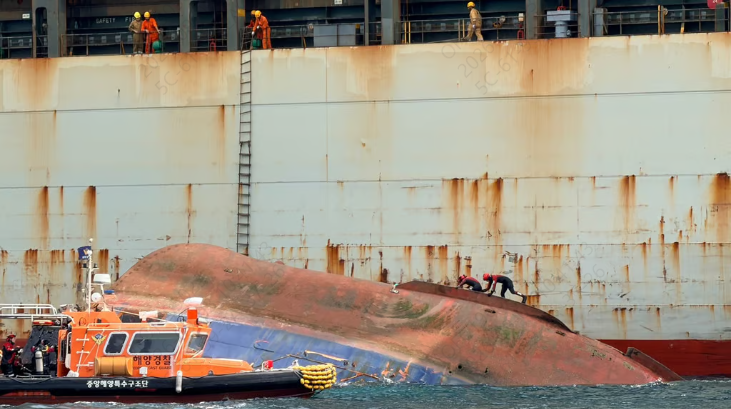
At 13:29 local time on 2 September 2026, a tugboat capsized roughly 9 kilometers east of Oryukdo Island outside Busan Port, Republic of Korea.
The vessel has a gross tonnage of 286, with Busan as its port of registry.
At the time, the tug was assisting a Liberian-flagged container ship in an outer-port towage operation in open water, rather than carrying out the more routine tug assistance used for berthing or unberthing alongside a quay.
Eight crew members were on board, including six Korean nationals and two Indonesian nationals.
Following the capsize, one Indonesian crew member was rescued by a passing merchant vessel. One Korean crew member was recovered from the overturned tug but later died in hospital. Six crew members remain missing.At 15:27 local time, the damaged tug sank completely in waters approximately 87 meters deep. The Korean Coast Guard deployed patrol craft and aircraft for search-and-rescue activities. Rough seas and strong ocean currents in the incident area have created substantial obstacles for rescue efforts.
As of the release of public news reports, official investigations have not yet drawn conclusions about the direct cause of the capsize. Public speculation surrounding the accident remains unconfirmed.
事故概况:釜山港(Port of Busan)外海港外拖带作业发生拖轮倾覆
当地时间2026年9月2日13:29,韩国釜山港(Port of Busan)五六岛(Oryukdo)以东约9公里海域,总吨286、登记港为釜山港(Port of Busan)的拖轮发生倾覆,事发时该轮正在对一艘利比里亚籍集装箱船开展港外开阔水域拖带作业,与常见的码头靠离泊协助不同,事故发生时拖轮正在港外开阔水域执行拖带任务。
该轮船上共计8名船员,其中6名韩国籍、2名印度尼西亚籍船员。事故发生后,一名印尼籍船员被途经商船救起;一名韩国籍船员从倾覆船体中搜救救出,但送医后不治身亡;剩余6名船员处于失踪状态。
当地时间15:27,受损拖轮在水深约87米的海域完全沉没。韩国海岸警卫队调动巡逻艇、航空器开展搜救工作,受事发海域大浪、较强海流的客观条件制约,搜救工作存在一定难度。截至公开新闻发布时点,事故直接诱因尚未形成官方调查结论,外界各类推测均未得到证实。
Search Continues as Investigation Gets Underway
Following the accident, the Korean Coast Guard has expanded surface search zones while assessing conditions for possible underwater search-and-recovery operations.
The Liberian-flagged container ship receiving towage support sustained no hull damage. Nevertheless, a sudden tugboat casualty may expose the assisted merchant vessel to secondary risks, including:
- Loss of external manoeuvring support
- Vessel schedule disruption
- Additional salvage-related expenses
- Potential subsequent legal and contractual disputes
Investigations into the accident cause are still underway. Notably, this casualty took place during outer-port open-water towage, rather than conventional quayside berthing and unberthing work. Ship-owners operating general-cargo vessels calling at overseas ports may draw practical reference from this incident.
事件现状:搜救持续,事故诱因有待官方定论
事故发生之后,韩国海岸警卫队持续扩大水面搜寻范围,同步评估水下搜救实施条件。接受拖带协助的利比里亚籍集装箱船船体未出现损伤,但该类拖轮突发险情,依然会给接受拖带服务的商船带来若干潜在衍生风险:船舶丧失外部操纵辅助、船期延误、产生救助费用,还可能引发后续法律与合同纠纷。
目前事故原因仍在调查之中。不过从公开信息来看,此次事故发生在港外拖带过程中,而非传统的码头靠离泊作业。对于经常挂靠海外港口的散杂货船东来说,这类作业场景可以多多参考。
Tug Operation Rules Vary Significantly across Different Ports Worldwide
Regulatory frameworks governing tugboat services differ widely from port to port across the globe. In some jurisdictions, tug resources are centrally dispatched by local port authorities. Other ports permit ship-owners to select service providers independently. Certain locations impose dedicated approval procedures specifically for outer-port towage.
- North-East Asian ports (exemplified by Busan Port)
Port authorities designate approved tug service suppliers. Apart from standard in-port berthing support, these tugs may conduct open-water outer-port towage. Operators need to refer to both local port regulations and commercial service contracts to clarify sea-state limits and liability allocation for outer-port towage.
- Selected South-East Asian ports
Ship-owners or charterers may enjoy a degree of freedom to choose tug service providers. However, service providers can differ greatly with respect to tug technical condition, crew competency, and insurance coverage. Ship parties are advised to carry out pre-voyage due-diligence checks before arrival.
- Selected European and American ports
Port authorities manage centralized dispatch for tug assets. Outer-port open-water towage requires formal dedicated approval processes. In addition, a substantial body of legal precedents exists regarding liability apportionment for towage activities.
同样是拖轮作业,不同港口的规则也不一样
不同国家港口对拖轮的管理方式差异很大。有些港口由港口当局统一调度,有些允许船东自行选择服务商,也有一些港口针对港外拖带设置专门审批程序。
以本次事故发生的釜山港(Port of Busan)为代表的东北亚港口,多由港口指定可用拖轮服务商,除港内靠离泊作业之外,也可承接港外开阔水域协助拖带。港外拖带的海况限制、责任划分,需要结合当地港口规章以及商业服务合同综合确认。
部分东南亚港口,船东或租家具备一定选择权,可以自主选定拖轮服务商。但不同服务商之间,船舶设备状况、船员实操能力、保险覆盖范围存在差异,需要船方在航次前期开展前置核查。
部分欧美港口,拖轮资源由港口当局统一调度。针对港外开阔水域拖带作业,设置相对明确的专项审批流程,围绕拖带作业的责任划分,也积累较多的司法判例。
Outer-Port Towage: A Common Scenario for General-Cargo Vessels
General-cargo ships follow diverse trading routes, and a single vessel may call at multiple ports across countries and regions within one year. Operational practices proven suitable for familiar ports may not remain valid elsewhere. Discrepancies can appear in tug arrangement arrangements, sea-state limits, and liability allocation rules.
Compared with quayside berthing-assistance towage, outer-port open-water towage is far more vulnerable to weather, sea-state and current conditions. Should the tug suffer breakdown or loss of propulsion, the assisted merchant vessel must execute emergency responses within a very short time window.
For general-cargo voyages with multi-layer charter-party relationships, such incidents may also trigger extra expenses and complex liability determinations.
港外拖带,散杂货船并不陌生
散杂货船航线覆盖范围广,同一艘船一年内可能挂靠多个国家和地区港口。某些在熟悉港口行之有效的做法,换到其他港口未必适用。拖轮安排方式、海况限制以及责任划分,都可能存在明显差异。
与码头靠离泊作业相比,港外拖带受到天气、海况和流况影响更大。一旦拖轮出现故障甚至失去动力,接受协助的船舶往往需要在更短时间内完成应急处置。对于租约关系复杂的散杂货航次来说,后续还可能涉及额外费用和责任认定问题。
Key Considerations for Cross-Port Outer-Port Towage Operations
Confirm Local Port Regulatory Requirements Prior to Outer-Port Towage
At the voyage-planning stage, collect port-specific towage information via local shipping agents:
- Confirm whether outer-port towage operations are permitted locally;
- Clarify whether tug services are subject to mandatory port-authority dispatch or open for vessel-side selection;
- Gather publicly-available local sea state operational limits for towage.
Combined with vessel draft and cargo characteristics, assess the practical necessity to conduct outer-port towage.
Clarify Cost-sharing Rules in Case of Tug Accidents
In light of local tug-governance models, carefully review charter-party texts and identify the actual contracting party engaging tug services. Distinguish scenarios where tugs are arranged by port authorities, ship-owners, or charterers. Proactively agree on allocation mechanisms for demurrage, fuel consumption and salvage costs in the event of a tug casualty. This practice helps reduce contractual disputes after incidents occur.
Pre-notify your P&I Club where Appropriate
For voyages involving high-risk operations such as outer-port towage, ship operators are recommended to consult their P&I Clubs in advance. Verify policy coverage boundaries for third-party liability and salvage-related costs, and comply with voyage notification requirements. This measure mitigates potential claim-related risks arising from insufficient information disclosure.
Onboard Emergency Response: Separate Procedures for Different Tug-assist Scenarios
Onboard emergency response plans for tug-assisted operations should not adopt a one-size-fits-all approach. Operators shall establish distinct response workflows for two separate scenarios: quayside berthing-unberthing tug assistance, and open-water outer-port towage.
Define clear sequencing requirements for vessel manoeuvring actions, crew safety protection and external reporting under emergency scenarios such as tug breakdown or capsize. Corresponding onboard drills should also be arranged.
跨港口拖带作业关注重点
港外拖带前,先弄清当地港口怎么管
航次筹划阶段,依托当地代理收集目标港口拖带相关信息:确认港口是否允许开展港外协助拖带;厘清拖轮资源为港口强制调度,还是船方可自主选择;收集当地公开的作业海况限制。结合本船吃水、货种特征,评估港外拖带作业的实际必要性。
拖轮出了问题,费用谁承担
结合目标港口的拖轮管理模式,审慎审阅租约文本,明确拖轮实际雇佣主体,区分港口安排、船东雇佣、租家安排等不同情形。提前约定拖轮发生事故之后,滞期、燃油消耗、救助费用的分摊规则,尽可能减少事后的合同争议。
保赔协会是否需要提前报备
涉及港外协助拖带等高风险作业的航次,建议提前对接保赔协会,核实保单针对第三方责任、救助费用的承保边界,落实航次报备相关要求,规避因信息未同步带来的理赔隐患。
船上应急预案:不能只针对靠离泊作业
船舶内部的拖带应急预案不宜一概而论,需要将码头靠离泊拖带、港外开阔水域拖带分开制定处置流程。明确拖轮故障、倾覆等突发场景下,本船操纵动作、人员安全保障、对外报告的时序要求,配套开展演练。
Commonly-Overlooked Risk-management Points
- Even when tugboats are centrally dispatched by port authorities, ship-owners remain responsible for independently assessing prevailing sea states and operational plans. Risk evaluation should never be fully delegated to port-authority staff. Sea conditions during outer-port towage change dynamically. Operators should not rely solely on weather forecasts produced before operations start; sea-state updates shall be monitored continuously throughout operations. Pre-agreed threshold criteria for operation suspension are strongly advised.
- Port administrative regulations are not equivalent to commercial contract clauses. While port rules set administrative requirements, loss-allocation outcomes are primarily determined by charter-party agreements and tug service contracts. The two sets of documents cannot substitute for each other. Where outer-port towage is planned, build contingency buffers within voyage schedules to limit schedule disruption caused by unexpected events.
- Tug services represent critical external port support resources. Safety management implemented by port authorities and tug service providers cannot replace independent voyage risk control undertaken by ship-
Although definitive root causes for the Busan tug capsize are still pending official investigation outcomes, this incident delivers a clear reminder to ship-owners: tugs are not merely auxiliary assets for quayside berthing and unberthing. For voyages that may involve outer-port towage, advance familiarity with local rules, clear definition of liability boundaries and built-in schedule buffers will deliver far greater value than post-accident remedial measures.
还有几个容易被忽视的问题
即便拖轮由港口当局统一调度,船东依旧需要独立评估作业海况与作业方案,不可将风险研判完全交由港口方。港外拖带作业过程中海况处于动态变化,不能仅参考计划作业时刻的气象预报,作业全程持续跟踪海况更新,提前约定作业中止的判定条件。
港口行政规章不等同商业合同条款,行政规则提出管理要求,但损失分摊仍以租约、拖带服务合同作为重要依据,二者不可互相替代。如计划开展港外拖带,建议在航次计划中预留船期应急冗余,降低突发意外对整体船期带来的冲击。
拖轮属于港口重要外部作业配套资源,港口与拖轮服务商的安全管理,无法完全替代船东自身的航次风险管控。釜山港这起事故最终原因仍有待调查,但它再次提醒船东:拖轮并不只是靠离泊过程中的辅助力量。对于涉及港外拖带的航次,提前了解当地规则、明确责任划分,并为突发情况预留时间缓冲,往往比事故发生后的补救措施更重要。
E-PORTS is a comprehensive digital service platform dedicated to global in-port shipping services. We support ship-owners with access to worldwide port reference data, local shipping agent matchmaking, and on-call coordination support during maritime emergencies. If you require information regarding port operations, local customary practices, regulatory policies or cost references, please get in touch through below channels:
We Chat / Whats App:+86 13816101982
E-mail:contact@e-ports.com
E-PORTS作为面向全球船舶在港服务的数字化综合服务平台,可为船东提供全球各港口基础信息查询、当地代理对接、海事突发状况协调支持。若需要了解港口业务、当地作业惯例、政策及费用相关信息,可通过下述渠道联系。
We Chat / Whats App:+86 13816101982
E-mail:contact@e-ports.com
Disclaimer: The data, statements and analysis contained within this article are compiled from publicly-available sources and industry research materials. The content is prepared solely for industry exchange and reference purposes and shall not be construed as investment advice or binding operational commitments. Shipping markets are subject to multiple sources of uncertainty, including macroeconomic shifts, geopolitical developments and volatile weather conditions. When formulating operational and commercial decisions, readers are expected to conduct independent judgement, taking account of their own fleet profile, risk appetite and latest market intelligence.
*免责声明:本文所载数据及分析均基于公开信息和行业研究报告,仅供行业交流与参考,不构成任何投资建议或操作承诺。航运市场受宏观经济、地缘政治、天气变化等多重因素影响,存在不确定性。读者在制定具体经营决策时,应结合自身船队结构、风险承受能力及最新市场动态综合判断。
 RELATED NEWS
 Hotline
 Email
Email

 沪公网安备 31011502016705号
Disclaimer:
This communication has been prepared for general information only. To the maximum extent permitted by law, E-PORTS and its affiliated companies, its and their employees, directors, agents, contractors (of any tier) and partners shall not be liable for any loss, claim, charge, damage, liability or damages howsoever arising in connection with the information even if advised of the possibility of damages. The use of the information shall be at your sole risk. Information contained herein comes with no representation or warranty (express or implied) and specifically is not represented or warranted to be correct, complete, accurate or up to date. The information is provided on an “as is” and “as available” basis and is not intended to be relied upon in any way. You shall be solely responsible for the selection, use, efficiency and suitability of the information.






 Chat with us