
To Buy or Not to Buy Vessels Now: Seizing Opportunities or Chasing the Cycle? 现在买船,是抓住机会,还是追高?
In recent years, a notable trend has emerged across global shipping markets. While global trade has not undergone the massive expansion seen in previous market cycles, shipowners have maintained strong investment appetite. Activity remains robust across new-building orders and second-hand vessel transactions, keeping asset prices for multiple vessel types buoyant.
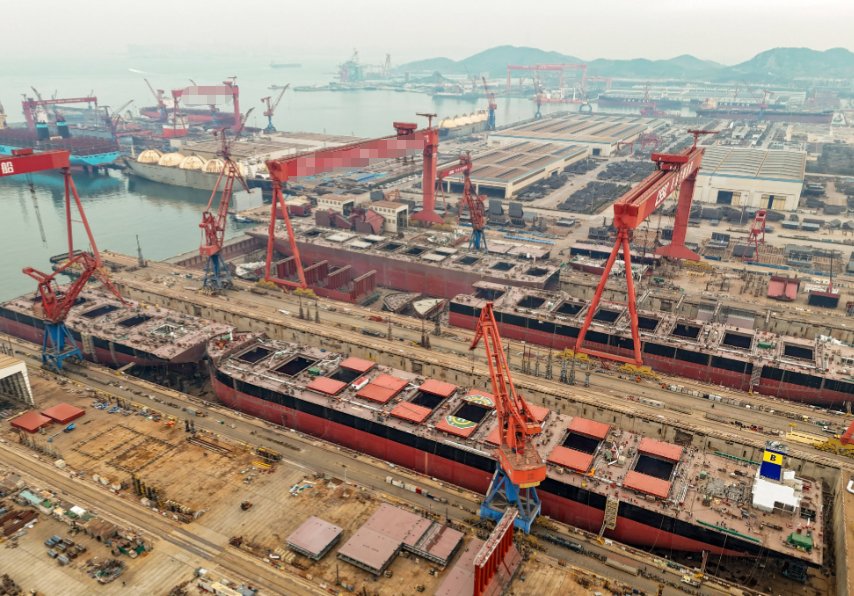
As of H1 2026, global new-building orders have stayed at a relatively high level, accounting for roughly 17% of the world’s existing fleet. Order books at premium shipyards stretch as far out as around 2028. Meanwhile, prices for modern energy-efficient second-hand vessels remain firm, especially for dry-bulk carriers and tankers. Many shipowners are optimizing their fleet structure via second-hand vessel acquisitions.
This raises a critical question: without explosive cargo-volume growth, why are shipowners still willing to commit substantial capital to new-buildings and vessel purchases?
Is the market genuinely short of vessels? Arguably, what is truly scarce today may not be vessels, but effective available capacity that can be deployed for actual cargo transportation. This distinction may be the key to understanding the dynamics of the 2026 shipping market.
近年来,全球航运市场出现了一个值得关注的现象:全球贸易增长并没有出现过去周期中的大幅扩张,但船东投资热情却持续升温。
从新造船订单到二手船交易,多个船型资产价格保持活跃。截至2026年上半年,全球船舶新造船订单仍维持较高水平,订单量约占全球现有船队17%左右,部分优质船厂订单已经排至2028年前后。与此同时,现代节能型二手船价格也保持坚挺,尤其是干散货船和油轮领域,船东仍在通过购买二手船优化船队结构。问题是:如果货量没有出现爆发式增长,为什么船东仍然愿意投入大量资金买船、造船?
市场真的缺船吗?还是说,今天真正稀缺的并不是“船”,而是能够真正投入运输的有效运力?这可能才是理解2026年航运市场的关键。
Why Is Vessel Acquisition So Popular Now?
From a conventional supply-demand perspective, the overall global fleet size is not small. Nevertheless, shipping capacity is far from a static metric. A vessel generates real effective capacity only when it sails normally, berths smoothly, completes port operations promptly, and redeploys for subsequent voyages.
Over recent years, the global shipping network has been subject to several shifts:
- Longer voyage distances
- Slower vessel turnaround cycles
- Increased port waiting times
Three major contributing factors can be identified:
- Restructured global trade routes
Driven by geopolitical risks, supply-chain security priorities and diversified energy import strategies, Asian buyers have stepped up energy sourcing from regions including the United States, West Africa and Brazil. Cargo volumes have not surged, yet this shift has pushed up ton mile demand.
- Route diversions
Disruptions such as the Red Sea situation have forced vessels to deviate from original routes, further extending voyage lengths. While the total number of vessels remains unchanged, each full transit cycle takes considerably longer to complete.
- Extended waiting periods at ports
Port congestion, berth adjustments, weather events, evolving regulatory requirements and poor coordination among different port-service interfaces can all prolong vessels’ port stays.
Individually, these delays may amount to only several hours or a few days. Cumulatively across the global fleet, however, they translate into vessel time occupied without generating cargo-transport output. Therefore, the core market constraint is not necessarily an insufficient number of ships, but rather a shortage of vessels capable of operating at high efficiency. This explains why shipowners keep investing in new and second-hand tonnage even in the absence of explosive cargo growth.
为什么现在买船这么火?
如果只看传统的供需关系,全球船队规模并不算小。但航运市场的“运力”从来不是一个静态数字。一艘船只有在正常航行、顺利靠泊、快速完成作业并重新投入下一段运输时,才真正形成有效运力。
而过去几年,全球航运网络正在发生一系列变化:航程变长了,船舶周转变慢了,港口等待增加了。
首先需要关注的自然是,全球贸易路线正在发生变化。
以能源运输为例,受到地缘政治风险、供应链安全以及能源进口多元化影响,部分亚洲买家开始增加来自美国、西非、巴西等区域的能源采购。这意味着货没有明显增加,但吨海里需求增加了。
其次,是部分航线的绕航。
红海局势等因素导致部分船舶改变原有航线,航程被进一步拉长。船舶数量没有减少,但一艘船完成一次完整运输周期所需要的时间增加了。
最后,船舶在港口等待的时间也是经常被忽视的问题。
港口拥堵、泊位调整、天气变化、监管要求变化,以及不同港口服务之间的衔接效率,都可能让船舶在港时间增加。
这些时间看起来只是几个小时、一天或者几天。但放到整个船队来看,它们最终都会变成被占用、却没有产生运输价值的船舶时间。所以,今天市场所面对的可能并不是简单的“船不够多”,而是“真正能够高效参与运输的船不够多”。
这也是为什么,在全球货量没有爆发式增长的情况下,船东仍然愿意投入大量资金买船、造船。
Is Vessel Acquisition the Optimal Solution?
Shipowners have demonstrated strong investment appetite in the current market. According to Clarksons Research, global new-building orders reached 1,108 vessels (approximately 33.6 million Compensated Gross Tonnage / CGT) in the first five months of 2026. This order pace is comparable with recent strong market phases and sits well above long-term historical averages. Sustained new-building activity reflects shipowners’ confidence in shipping-asset value over coming years.
Nevertheless, uncertainty persists:
- If today’s high market earnings stem from long-term trade-route reconfiguration, such demand may still exist by the time new vessels are delivered.
- If current capacity tightness partly stems from temporary factors such as route diversions, port congestion and regional supply disruptions, market conditions could look very different when new tonnage hits the water in batches years from now.
As such, before committing capital to additional tonnage, shipowners may consider alternative approaches to unlock capacity trapped within their existing fleet - and this can be achieved without building or purchasing new vessels.
买船是不是最优解?
从目前市场表现来看,船东投资热情确实处于较高水平。根据Clarksons Research数据,2026年前5个月全球新造船订单达到1108艘、约3360万修正总吨(CGT),订单节奏接近近年来强劲水平,明显高于历史平均水平。新船投资持续活跃,反映出船东对于未来几年航运资产价值仍保持较强信心。
如果当前市场的高收益主要来自长期的贸易路线重构,那么新船交付时,这种需求可能依然存在。但如果当前部分运力紧张来自绕航、港口拥堵、区域性中断等阶段性因素,那么几年之后,当新船集中交付时,市场环境是否还是今天这样?
没有人能够确定。
所以,对于船东而言,在增加新船之前,有没有其他路径把现有船队中被“束缚”的运力释放出来?答案是有,而且这并不一定需要增加一艘新船。
Alternatives to Vessel Procurement: How to Unlock Trapped Capacity
Vessel purchasing increases the total number of physical ships. By contrast, refined operational management maximizes the volume of cargo that existing vessels can carry.
How many voyages one vessel can complete per year depends not merely on sailing speed and voyage distance. It is also shaped by numerous fragmented operational variables:
- Are vessel schedules reasonably arranged?
- Can port waiting times be anticipated in advance?
- Can adjustments be made promptly in response to weather shifts and port changes?
- Can crew rotation, spare-parts resupply and provisions be aligned with vessel schedules?
- Can port side services be executed in a coordinated manner?
- Are rapid resolution mechanisms available when unexpected incidents take place?
None of these points appear as direct “capacity issues” when viewed in isolation. For an entire fleet, however, every waiting period, redundant communication and poorly coordinated service interface consumes valuable vessel time - and vessel time equals usable capacity.
Accordingly, refined fleet operation is not about over-complicating management workflows. Its core objective is to minimize vessel time that yields no transport output.
Approach 1: Improve overall fleet operating efficiency
For shipowners operating multiple vessels across diverse regional markets, management priorities should shift away from single-vessel oversight toward holistic fleet management. Individual vessels operate along different trade lanes, call at different ports and sit in distinct operational phases.
Reliance on siloed information and manual communication often leads to sub-optimal fleet-level outcomes. Each vessel may appear to be in active operation, yet the fleet as a whole fails to reach its full performance potential.
For instance: one vessel suffers a one-day delay caused by revised port plans. Outdated information then makes it miss optimal connection windows for its subsequent voyage. On an individual basis, such losses look minor. Repeated across dozens of vessels, however, they add up to massive wasted vessel time.
Therefore, refined fleet management does not aim simply to make ships sail faster. Its true goal is to cut unnecessary waiting time, idle transit and ineffective communication, so that every vessel can stay in productive service as continuously as possible.
Approach 2: Accelerate vessel turnaround at ports
Fleet management governs how vessels sail; port-side services determine how quickly a vessel can depart for its next voyage after arrival. This dimension is frequently overlooked by shipowners.
While moored in port, a vessel has finished its prior sailing leg but cannot commence its next cargo movement. Delays during berthing operations, provisions, spare-parts delivery and crew rotation keep vessels idle in port and prevent them from generating further revenue.
Port-service efficiency is therefore an integral component of effective capacity. High-quality port operations are not limited to completing discrete tasks. Instead, services should be pre-planned and executed in parallel to minimise downtime.
Practical examples of best practice:
- Gain advance visibility over port policies, berth arrangements and service requirements prior to vessel arrival
- Coordinate agents, provisions, spare-parts delivery and crew rotation to run concurrently after berthing
- Swiftly adjust plans in response to last-minute port revisions, weather disruptions or regulatory changes
The overarching objective is straightforward: complete all port-related tasks as quickly as possible and send vessels back out to sea. For shipowners, saving a few hours in port for one single vessel may seem trivial. When these efficiency gains scale across an entire fleet, however, they unlock substantial extra vessel time available for commercial cargo transport.
除了买船,还有什么办法释放运力?
如果说买船解决的是“增加多少船”,那么精细化运营解决的就是“现有的船,能够完成多少运输任务?”
一艘船一年能够完成多少次运输,并不只取决于船速和航程。它还取决于大量看似零散的运营环节:
船期安排是否合理?
港口等待能不能提前预判?
天气和港口变化能不能及时调整?
船员换班、备件、补给等事项能不能与船期有效衔接?
港口服务能不能同步推进?
突发情况发生后,能不能快速找到解决方案?
这些问题单独看,都不像“运力问题”。但对于一支船队而言,每一次等待、每一次重复沟通、每一次服务衔接不畅,最终都会占用船舶时间。而船舶时间,本身就是运力。
因此,所谓精细化运营,并不是简单地把管理做得更加复杂。它真正要解决的是:减少船舶不产生运输价值的时间。
第一种释放运力的方式:让船队跑得更高效。
对于拥有多艘船、长期运营多个区域市场的船东来说,真正需要管理的已经不是某一艘船,而是一整支船队。不同船舶处于不同航线、不同港口和不同运营阶段。
如果仍然依赖分散的信息和人工沟通,很容易出现一个问题:每一艘船都在运营,但整个船队并没有达到最优状态。
例如,一艘船因为港口计划变化多等待一天,下一段航程又因为信息更新不及时而错过更合适的衔接。单看每一个环节,损失似乎都不大。但当类似情况不断发生在几十艘甚至更多船舶上,最终形成的就是大量被浪费的船舶时间。
因此,船队精细化运营的核心并不是“让船跑得更快”。而是:让船少等待、少空转、少做无效沟通,让每一艘船尽可能连续地处于有效运营状态。
第二种释放运力的方式:让船更快离开港口。
如果说船队运营解决的是“船怎么跑”,那么港口服务解决的就是:“船到了港以后,多久能够重新出发?”这是很多船东容易忽视的一块。
船舶在港期间,实际上处于一个特殊状态:它已经完成上一段航行,却还没有开始下一段运输。如果靠泊、作业、补给、备件、船员换班等服务之间存在大量等待,那么船舶虽然停在港口,却无法创造下一段运输价值。
所以,港口服务效率本身,也是有效运力的一部分。真正高效的港口运营,不只是把某一项服务完成。而是尽可能让不同服务提前准备、同步推进、减少等待。
例如:
在船舶抵港前,提前掌握港口政策、泊位安排及服务要求;
船舶靠泊后,代理、补给、备件、船员换班等事项尽可能协同推进;
如果港口临时发生计划调整、天气变化或监管变化,也能够快速调整方案。
最终目的只有一个:让船舶尽快完成在港任务,重新回到航线上。因为对于船东来说,船在港口少停几个小时,看起来只是节省了几个小时。
但如果这种效率提升能够持续发生在整个船队中,它释放出来的就不再只是几个小时,而是更多可以真正投入运输的船舶时间。
Revisiting the Core Question: Opportunity or Hype in Vessel Purchases?
There is no simplistic “yes” or “no” answer. Vessel acquisition remains a key lever for shipowners to adjust fleet profiles, provided that trade-route restructuring persists and ton mile demand keeps rising alongside long-term fleet renewal requirements.
Even so, it should be noted that current capacity tightness is not entirely driven by insufficient vessel numbers. Extended voyages, route diversions, port waiting and operational inefficiencies can “lock up” capacity that already exists within the global fleet.
Therefore, shipowners are now facing two different paths:
First, increasing physical capacity through vessel acquisition.
Second, unlocking hidden capacity through refined operational management.
One answers the question:
“How many more vessels can we add?”
The other answers a deeper question:
“How much more value can our existing fleet generate?”
所以,现在买船,是抓住机会还是追高?
答案可能没有简单的“是”或“不是”。如果全球贸易路线持续重构,吨海里需求持续增长,船队更新又存在长期需求,那么买船当然仍然是船东调整船队结构的重要方式。
但与此同时,也不能忽略一个事实:当前市场中的部分运力紧张,并不完全来自船舶数量不足。航程拉长、绕航、港口等待以及运营效率下降,同样会把原本存在的运力“锁住”。
因此,船东面对的其实是两个不同的问题:
- 买船,是增加运力。
- 精细化运营,是释放运力。
一个解决“有没有更多的船”,另一个解决“现有的船能不能创造更多运输价值”。
Beyond Fleet Size, Operational Efficiency Emerges is a New Source of Competitive Edge
Against an increasingly complex global shipping network, shipowners still need to make fleet-investment decisions aligned with market shifts. Even so, refined management of existing fleets can also serve as an important pathway to boost profitability.
This holds especially true for port-side operations. Every reduction in unnecessary waiting releases incremental capacity; every shortening of port turnaround enables vessels to embark on subsequent voyages sooner.
E-PORTS delivers comprehensive global vessel-in-port services built for this exact scenario. By integrating resources from ports, shipping agents and service suppliers, E-PORTS enables shipowners to coordinate port-related vessel activities more efficiently. It cuts wasted time caused by fragmented information flow and poor service alignment, and provides actionable solutions for policy updates, emergencies and diverse port-call requirements.
Within today’s shipping market, capacity can be expanded in two ways: building or buying additional vessels, or reducing waiting times and speeding up turnarounds for ships you already own. The latter represents an alternative strategy worthy of shipowners’ consideration in 2026, alongside traditional vessel procurement.
For more information regarding port-business insights, policy updates and cost forecasting, please reach out via:
WeChat / WhatsApp: +86 13816101982
E-mail: contact@e-ports.com
船队规模之外,运营效率正在成为新的竞争力
在全球航运网络越来越复杂的今天,船东当然仍然需要根据市场变化进行船队投资。但与此同时,对现有船队进行精细化运营,同样可能成为提升收益的重要方式。
尤其是在港口这一端:每减少一次不必要的等待,就可能多释放一部分船舶运力;每缩短一次在港服务时间,就可能让船舶更早进入下一段运输。
E-PORTS正是围绕这一场景,为船东提供全球船舶在港综合服务。通过整合港口、代理及供应商等多方资源,E-PORTS帮助船东更加高效地协调船舶在港事务,减少信息传递和服务衔接中的无效时间,并针对港口政策变化、突发情况及各类在港需求提供解决方案支持。
因为在今天的航运市场:增加一艘船,是增加运力。让现有的船少等一点、快走一点,同样是在增加有效运力。而这可能正是2026年船东在“继续买船”之外,值得重新审视的另一种选择。如需了解更多港口业务、详细政策、信息及费用预测等,可通过以下方式联系:
We Chat / Whats App:+86 13816101982
E-mail:contact@e-ports.com
References:
Clarksons Research.Shipping Intelligence Weekly / World Shipyard Monitor.
Veson Nautical.Shipping Market Outlook Q3 2026.
BIMCO.Dry Bulk Shipping Market Overview and Outlook 2026.
BIMCO & International Chamber of Shipping. Seafarer Workforce Report 2026.
Allied Shipbroking.Weekly S&P Reports.
BRS Group.Annual Shipping Market Review.
Disclaimer: All data, analysis and commentary contained in this article are compiled based on public official releases and industry research reports, provided solely for industry exchange and reference purposes. This content shall not be construed as investment advice or binding operational commitments. Global shipping markets are subject to volatile influencing factors including macroeconomic cycles, geopolitical shifts and meteorological conditions, which introduce inherent uncertainties. All carriers and traders are recommended to formulate operational decisions after cross-referencing their own fleet structure, risk tolerance thresholds and latest real-time market intelligence.
免责声明:本文所载数据及分析均基于公开信息和行业研究报告,仅供行业交流与参考,不构成任何投资建议或操作承诺。航运市场受宏观经济、地缘政治、天气变化等多重因素影响,存在不确定性。读者在制定具体经营决策时,应结合自身船队结构、风险承受能力及最新市场动态综合判断。
 RELATED NEWS
 Hotline
 Email
Email

 沪公网安备 31011502016705号
Disclaimer:
This communication has been prepared for general information only. To the maximum extent permitted by law, E-PORTS and its affiliated companies, its and their employees, directors, agents, contractors (of any tier) and partners shall not be liable for any loss, claim, charge, damage, liability or damages howsoever arising in connection with the information even if advised of the possibility of damages. The use of the information shall be at your sole risk. Information contained herein comes with no representation or warranty (express or implied) and specifically is not represented or warranted to be correct, complete, accurate or up to date. The information is provided on an “as is” and “as available” basis and is not intended to be relied upon in any way. You shall be solely responsible for the selection, use, efficiency and suitability of the information.








 Chat with us