
AI Compute Surge Drives Supercapacitor Demand: Why Ports & Shipping Lanes Are Facing Rising Workloads? - An Emerging Global Logistics Chain Backed by AI Servers AI算力爆发,为什么先忙起来的是港口和航线? ——AI服务器背后,一条新的全球物流链正在形成
When it comes to the AI industry, most people first associate it with GPUs, chips and large language models, assuming industry competition may mainly unfold within laboratories and data centers.
提起AI产业,很多人首先想到的是GPU、芯片和大模型,认为这场竞争发生在实验室和数据中心。
However, for the shipping sector, transformations brought by AI may have already taken shape within ports, shipping routes and international logistics networks.
但对于航运业而言,AI带来的变化,早已率先出现在港口、航线和国际物流体系。
Over the past two years, global shipping market focus has centered on Red Sea security risks, Panama Canal capacity restrictions and adjustments to trade policies. Entering 2026, a new long-term cargo source is likely to experience rapid growth: AI infrastructure development.
过去两年,全球航运市场关注的焦点一直围绕红海局势、巴拿马运河限航以及贸易政策调整。而进入2026年,一个新的长期货源正快速崛起——AI基础设施建设。
Per forecasts from TrendForce, nine global cloud service providers (AWS, Microsoft, Google, Meta, Oracle, Alibaba Cloud, Tencent Cloud, Baidu, ByteDance) are expected to record USD 830 billion in total capital expenditure in 2026, representing a 79% year-on-year increase. Such funds may be predominantly allocated to AI servers, GPU clusters and data center construction. Meanwhile, the overall installed capacity of global data centers could reach 155GW, a roughly 29% year-on-year rise.
根据TrendForce预测,2026年全球九大云服务商(AWS、Microsoft、Google、Meta、Oracle、阿里云、腾讯云、百度、字节跳动)资本支出预计达到8300亿美元,同比增长79%,主要投向AI服务器、GPU集群及数据中心建设。同时,全球数据中心总装机容量预计达到155GW,同比增长约29%。
For the shipping industry, this signals that growth may not be limited to GPUs alone, but spans the entire AI industrial chain.
对于航运行业而言,这意味着真正增长的不只是GPU,而是一整条AI产业链。
服务器、液冷系统、UPS、电源模块、超级电容、储能设备……这些高附加值产品正不断跨境流动,一条围绕AI产业的新物流链正在形成。
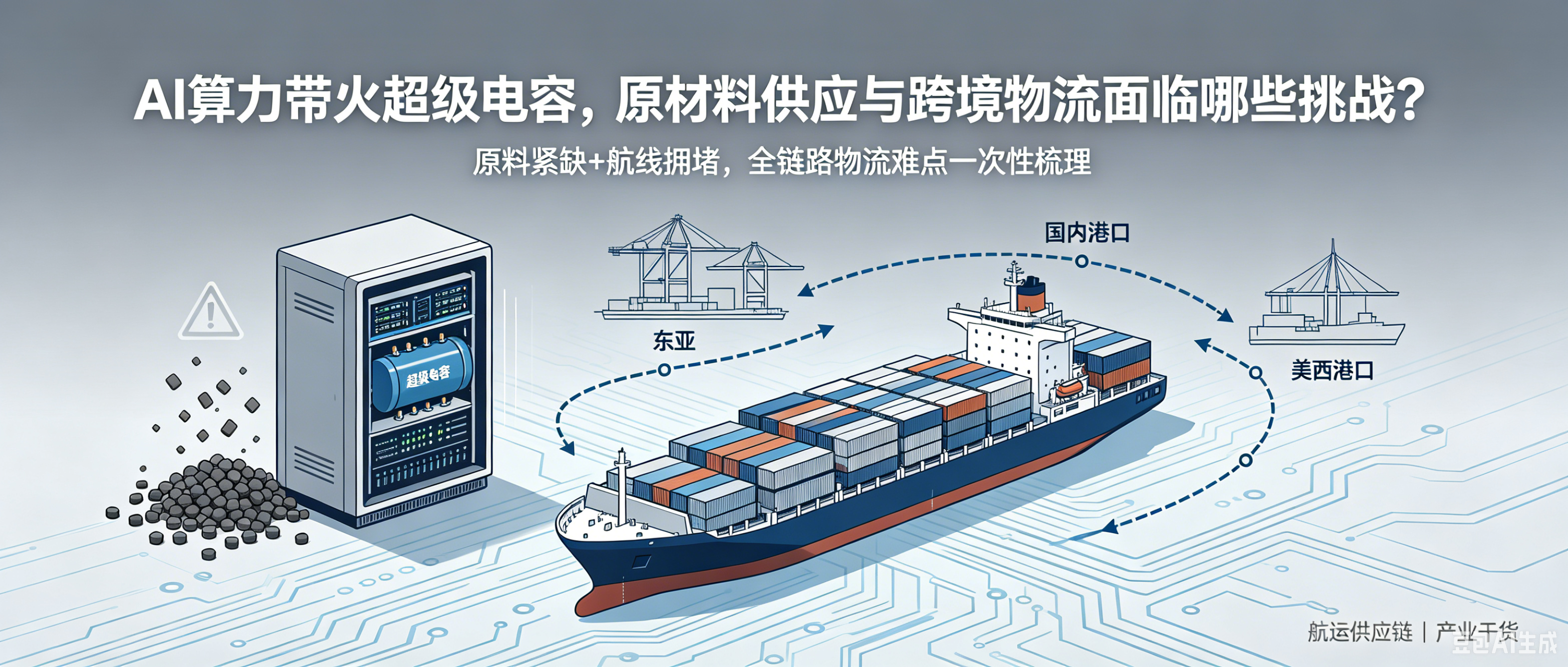
AI Competition Extends Beyond GPU Supply Shortages
AI争夺的,不只是GPU
Over the past year, apart from tight GPU supply, another product attracting widespread attention across the industrial chain may be supercapacitors.
过去一年,除了GPU供不应求之外,另一个开始受到产业链关注的产品是——超级电容(Supercapacitor)。
Rising power consumption of AI servers generates larger instantaneous power fluctuations during GPU operation, which traditional power supply systems may fail to stabilize in a timely manner.
随着AI服务器功耗不断提升,GPU运行时会产生更大的瞬时功率波动,传统供电系统难以及时完成稳定响应。
As a result, new-generation AI servers are likely to widely adopt Lithium-ion Capacitors (LICs) as auxiliary power supply systems for instantaneous power compensation and voltage stabilization.
因此,新一代AI服务器开始越来越多地采用LIC,即锂离子混合超级电容,作为辅助供电系统,用于瞬时功率补偿和电压稳定。
TrendForce projects that global AI server shipments could maintain roughly 28% year-on-year growth in 2026.
TrendForce预计,2026年全球AI服务器出货量仍将保持约28%的增长。
At the same time, multiple industrial institutions predict that high-performance LIC products may remain in tight supply, while new production capacity could take time to come online.
与此同时,多家产业机构预计,高性能LIC产品仍将维持供需偏紧状态,新增产能释放仍需要时间。
However, for shipping practitioners, the most noteworthy factor may not be supercapacitors themselves, but the logistics shifts driven by their market demand.
不过,对于航运而言,真正值得关注的并不是超级电容本身,而是它背后的物流变化。
A New Global Logistics Chain is Taking Shape
一条新的全球物流链正在形成
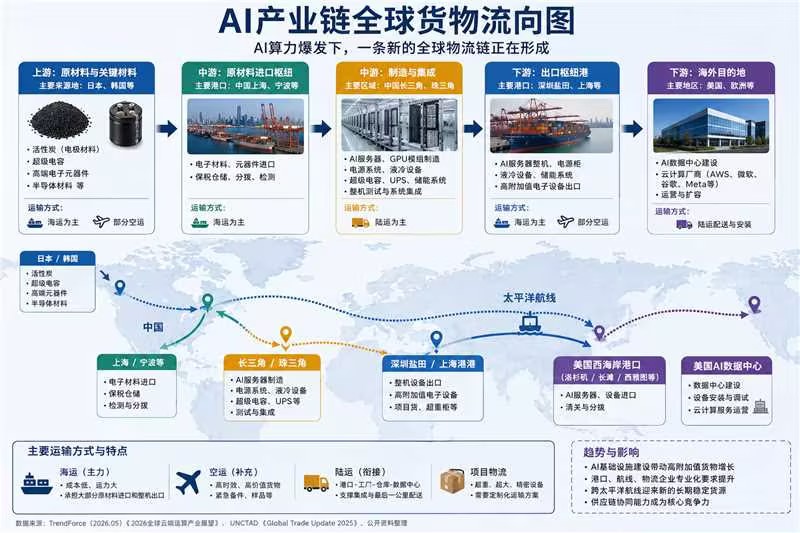
Breaking down the composition of AI servers reveals a cross-border supply chain covering multiple countries and regions:
如果把AI服务器拆开来看,你会发现,它已经形成了一条跨越多个国家的供应链。
First Stop: Japan & South Korea
第一站:日本、韩国
These regions may supply high-performance electronic materials, electronic chemicals and core components.
主要提供部分高性能电子材料、电子化学品及关键元器件。
Second Stop: Yangtze River Delta & Pearl River Delta, China
第二站:中国长三角、珠三角
Manufacturing of AI servers, GPU modules, power supply systems, supercapacitors and supporting equipment may be concentrated here.
完成服务器、GPU模组、电源系统、超级电容及相关配套设备制造。
Third Stop: Shanghai Port, Ningbo Zhoushan Port & Yantian Port (Shenzhen)
第三站:上海港、宁波舟山港、深圳盐田港
These hubs handle cargo consolidation, customs clearance and export arrangements for finished AI hardware.
完成集港、报关及出口。
Fourth Stop: U.S. West Coast Ports
第四站:美国西海岸
Shipments enter North American logistics networks via Los Angeles, Long Beach, Seattle and other terminals.
经洛杉矶港、长滩港等港口进入北美物流网络。
Fifth Stop: AI Data Centers
第五站:AI数据中心
Deliveries are completed to data centers operated by cloud vendors including AWS, Microsoft, Google and Meta.
最终交付AWS、Microsoft、Google、Meta等云计算企业建设的数据中心。
Compared with traditional consumer electronics, this logistics chain features two core traits:
相比传统消费电子,这条物流链最大的特点是:
Imports of upstream raw materials and exports of high-end finished equipment may register simultaneous growth.
原材料进口+高端装备出口同步增长。
Transport demand remains steady not only for complete server racks, but also upstream electronic materials, power supply hardware, liquid cooling devices and energy storage systems.
不仅服务器整机需要运输,上游电子材料、电源设备、液冷设备及储能系统同样形成持续稳定的跨境运输需求。
For liner operators, the AI industry may deliver long-term steady cargo volumes rather than one-off shipment surges.
对于班轮公司而言,这意味着AI产业带来的不是一次性的抢运,而是一种新的长期货源。
Ports Likely to Gain Benefit First
哪些港口将率先受益?
At present, logistics services for the AI industrial chain may primarily converge at comprehensive major hub ports in China.
目前来看,AI产业链物流仍主要集中在中国综合性枢纽港。
Shanghai Port & Ningbo Zhoushan Port
上海港、宁波舟山港
Backed by clustered electronic manufacturing industries across the Yangtze River Delta, the two ports handle large volumes of imported electronic materials and exported servers & power equipment.
依托长三角电子制造产业集群,承担大量电子材料进口及服务器、电源设备出口。
In recent years, both terminals have continuously upgraded logistics capacity for high-end equipment, temperature-controlled warehousing and precision machinery transportation, making them well-suited for handling high-value electronic cargoes.
近年来,两港持续完善高端装备物流、恒温仓储及精密设备运输能力,更适合承接高附加值电子产品。
Yantian Port, Shenzhen
深圳盐田港
Supported by mature server manufacturing clusters in the Pearl River Delta, Yantian may stand as a vital export gateway for AI hardware bound for North America.
依托珠三角服务器制造产业基础,成为北美AI设备出口的重要门户。
AI server racks, power cabinets and liquid cooling hardware carry high cargo values and require tight delivery schedules. They could raise stricter standards for port schedule reliability, yard handling efficiency and trucking support, enabling Yantian to retain competitive advantages in electronic product exports.
AI服务器、电源柜、液冷设备等产品货值高、交付周期短,对港口准班率、堆场效率及拖车保障提出更高要求,也使盐田港继续保持电子产品出口优势。
Compared with small and medium-sized ports, large hubs equipped with robust integrated logistics and professional warehousing facilities may gain further competitive edges amid the AI development boom.
相比中小港口,综合物流能力更强、专业仓储更完善的大型港口,在AI时代竞争优势将进一步凸显。
Trans-Pacific Lanes Welcome Emerging Long-Term AI Cargo Sources
跨太平洋航线,正在迎来新的长期货源
Over recent years, incremental cargo volumes on Trans-Pacific lanes may have stemmed mainly from new energy vehicles, energy storage equipment and cross-border e-commerce.
过去几年,跨太平洋航线新增货源主要来自新能源汽车、储能设备及跨境电商。
From 2026 onwards, AI infrastructure construction could emerge as a fresh growth driver.
而进入2026年,AI基础设施建设开始成为新的增长动力。
Global AI server deployments may remain predominantly concentrated in North America. AWS, Microsoft, Google, Meta and other tech firms keep expanding data center construction scales. Most China-manufactured servers, power systems, liquid cooling hardware and supporting equipment could be shipped to U.S. West Coast terminals via Trans-Pacific routes.
目前,全球AI服务器部署仍主要集中在北美。AWS、Microsoft、Google、Meta等企业持续扩大AI数据中心建设规模,中国制造的服务器、电源系统、液冷设备及相关配套产品,绝大部分仍通过跨太平洋航线运往美国西海岸。
Three shared characteristics distinguish such cargoes from traditional consumer electronics:
与传统消费电子相比,这类货物具有三个共同特点:
Higher value per container
第一,单柜货值更高。
A single container loaded with AI servers and supporting hardware may carry far higher value than ordinary consumer electronics, requiring stricter standards for transit safety, full cargo visibility and schedule reliability.
一柜AI服务器及配套设备价值远高于普通消费电子,对运输安全、全程可视化及准班率要求更高。
More project-based logistics
第二,项目制运输更加明显。
Data center construction usually requires concentrated deliveries aligned with project milestones. Enterprises may tend to secure long-term freight contracts in advance rather than relying solely on spot market space.
数据中心建设通常按照项目节点集中交付,企业更倾向提前锁定长期舱位,而不是依赖现货市场。
Higher supply chain stability requirements
第三,对供应链稳定性要求更高。
Any delays at any link — from raw material imports to finished server exports — may disrupt the overall data center construction timeline.
从电子材料进口,到服务器出口,任何一个环节出现延误,都可能影响整个数据中心建设周期。
Therefore, the AI sector may not only boost cargo volumes for liner carriers, but also raise overall service thresholds for logistics providers.
因此,对于班轮公司而言,AI产业不仅增加了货量,更提高了物流服务门槛。
AI Reshapes Cargo Mix of Existing Lanes Rather Than Creating Brand-New Shipping Routes
AI没有催生一条新航线,却正在改变航线货源结构
It is worth noting that no carrier has launched dedicated “AI shipping lanes” to date.
值得注意的是,目前并没有船公司专门开通所谓"AI航线"。
The core shift may lie in the evolving cargo composition of existing shipping routes.
真正发生变化的是现有航线的货源结构。
例如:
Japan & South Korea – China Lanes
日韩—中国航线
These lanes transport high-performance electronic materials, electronic chemicals and core components.
承担高性能电子材料、电子化学品及关键元器件运输。
China – U.S. West Coast Lanes
中国—美国西海岸航线
Carry exports of high-value hardware including AI servers, complete GPU racks, power cabinets, liquid cooling systems, UPS and supercapacitors.
承担AI服务器、GPU整机、电源柜、液冷系统、UPS、超级电容等高附加值设备出口。
Compared with regular consumer electronics, such shipments may feature more stable transport frequencies and higher cargo values, placing greater demands on long-term contract space and cross-party supply chain coordination.
相比普通消费电子,这类产品运输频次更稳定、货值更高,对长协舱位和供应链协同提出更高要求。
Over the next several years, the AI industry could become one of the key incremental cargo sources across Trans-Pacific shipping corridors.
未来几年,AI产业有望成为跨太平洋航线的重要新增货源之一。
Logistics Providers Are Already Preparing
国际物流企业,已经开始提前布局
While no carriers have released official data on the proportion of AI-related cargo volumes, global logistics service providers may have adjusted their business portfolios to cater to data center construction demands.
虽然目前没有船公司公布"AI货源占比",但国际物流企业已经开始围绕AI数据中心建设调整业务布局。
For instance, DHL Supply Chain announced plans to build 10 new data center logistics warehouses across North America covering over 7 million square feet, dedicated to transporting AI infrastructure including servers, cabinets and power equipment.
例如,DHL Supply Chain宣布将在北美新增10座数据中心物流仓库,总面积超过700万平方英尺,专门服务服务器、机柜、电源设备等AI基础设施运输。
Meanwhile, Kuehne+Nagel, DSV, FedEx and other global logistics firms have rolled out optimized Data Center Logistics solutions, covering servers, UPS units, power modules, liquid cooling hardware and end-to-end project logistics services.
与此同时,Kuehne+Nagel、DSV、FedEx等国际物流企业也陆续强化Data Center Logistics(数据中心物流)解决方案,服务范围覆盖服务器、UPS、电源模块、液冷设备及项目物流。
This trend indicates that within the global logistics industry, AI hardware may be viewed as an independent market segment with sustained growth potential, rather than a subset of ordinary consumer electronics.
这说明,在国际物流行业看来,AI已经不是普通电子产品,而是一个独立且持续增长的新市场。
Overlooked Trend: Rising Demand for Dangerous Goods Logistics
一个容易被忽视的变化:危险品物流需求正在增加
Beyond complete server racks, the AI industrial chain may also drive rising transport demand for special cargo categories.
除了服务器整机,AI产业链还带动了一部分特殊货物运输需求。
For example, certain power storage materials, specialized activated carbon and related energy storage units may fall under dangerous goods regulatory standards during international transit.
例如,部分电力储能材料、特种活性炭及相关储能单元,在国际运输过程中涉及危险货物管理要求。
As AI infrastructure construction scales up continuously, shipments of such hazardous cargoes may grow simultaneously, which could further elevate the importance of dedicated dangerous goods freight space, professional packaging, port inspections and compliant customs declarations.
随着AI基础设施建设持续扩大,这类货物运输需求同步增长,也意味着危险品仓位、专业包装、港口查验及合规申报的重要性进一步提升。
In the future, ports, carriers and logistics firms equipped with dangerous goods transport qualifications and mature project logistics experience may capture additional market opportunities.
未来,具备危险品运输能力及专业项目物流经验的港口、船公司及物流企业,将迎来更多市场机会。
Over the past few years, incremental cargo volumes in global shipping may have been dominated by new energy vehicles, photovoltaic products and cross-border e-commerce.
过去几年,全球航运新增货源主要来自新能源汽车、光伏及跨境电商。
Today, a new market keyword emerges: AI infrastructure.
而今天,一个新的关键词正在出现——AI基础设施。
Shipments cover not only GPUs, but also servers, power supply systems, liquid cooling hardware, supercapacitors, energy storage equipment and a full range of supporting electrical facilities.
它运输的不只是GPU,还包括服务器、电源系统、液冷设备、超级电容、储能设备以及大量配套电力设施。
For shipping companies, the most critical metric to monitor moving forward may not be GPU sales volume, but the capacity to establish early layout within this fast-expanding industrial chain.
对于航运企业而言,未来真正值得关注的,不只是AI芯片卖了多少,而是谁能够率先布局这条正在快速成长的产业链。
When ports handle surging AI hardware exports, logistics providers set up dedicated data center supply chain teams, and Trans-Pacific lanes carry rising volumes of high-value cargo, the influences of AI may no longer be confined to the tech sector — they could reshape the entire global logistics network.
当港口开始承接更多AI装备出口,当国际物流企业成立专门的数据中心供应链团队,当跨太平洋航线持续增加高附加值货源时,AI带来的影响,就已经不再局限于科技行业,而是在重新塑造全球物流网络。
Moving forward, E-PORTS will keep tracking emerging shifts brought by the AI industrial chain to global ports, shipping lanes and supply chains, delivering timely, professional market analysis and logistics insights for shipping and international trade enterprises. For business inquiries, please contact us:
未来,E-PORTS也将持续关注AI产业链对全球港口、航线及供应链带来的最新变化,为航运及国际贸易企业提供更加及时、专业的市场分析和物流资讯。欢迎联系我们:
Whats App / We Chat:+86 13816101982
Email:contact@e-ports.com
Disclaimer:All data and analysis contained in this article are compiled from publicly available resources, provided solely for industry exchange and reference, and do not constitute investment advice or binding operational guidance. The shipping market may be affected by evolving international trade, geopolitics, capacity supply-demand balance, meteorological changes and other variables, which could alter real-world market conditions. Readers shall conduct comprehensive evaluation based on the latest market intelligence before making operational decisions.
免责声明:本文所载数据及分析均基于公开信息整理,仅供行业交流与参考,不构成任何投资建议或经营决策依据。航运市场受国际贸易、地缘政治、运力供需及天气等多重因素影响,实际情况可能发生变化,相关决策请结合最新市场信息综合判断。
 RELATED NEWS
 Hotline
 Email
Email

 沪公网安备 31011502016705号
Disclaimer:
This communication has been prepared for general information only. To the maximum extent permitted by law, E-PORTS and its affiliated companies, its and their employees, directors, agents, contractors (of any tier) and partners shall not be liable for any loss, claim, charge, damage, liability or damages howsoever arising in connection with the information even if advised of the possibility of damages. The use of the information shall be at your sole risk. Information contained herein comes with no representation or warranty (express or implied) and specifically is not represented or warranted to be correct, complete, accurate or up to date. The information is provided on an “as is” and “as available” basis and is not intended to be relied upon in any way. You shall be solely responsible for the selection, use, efficiency and suitability of the information.








 Chat with us